Flex commercial terms, defined
The words operators, enterprise clients and finance teams use when they sell, bill and report flex workspace in India. Each term links to a deeper page where we have one.
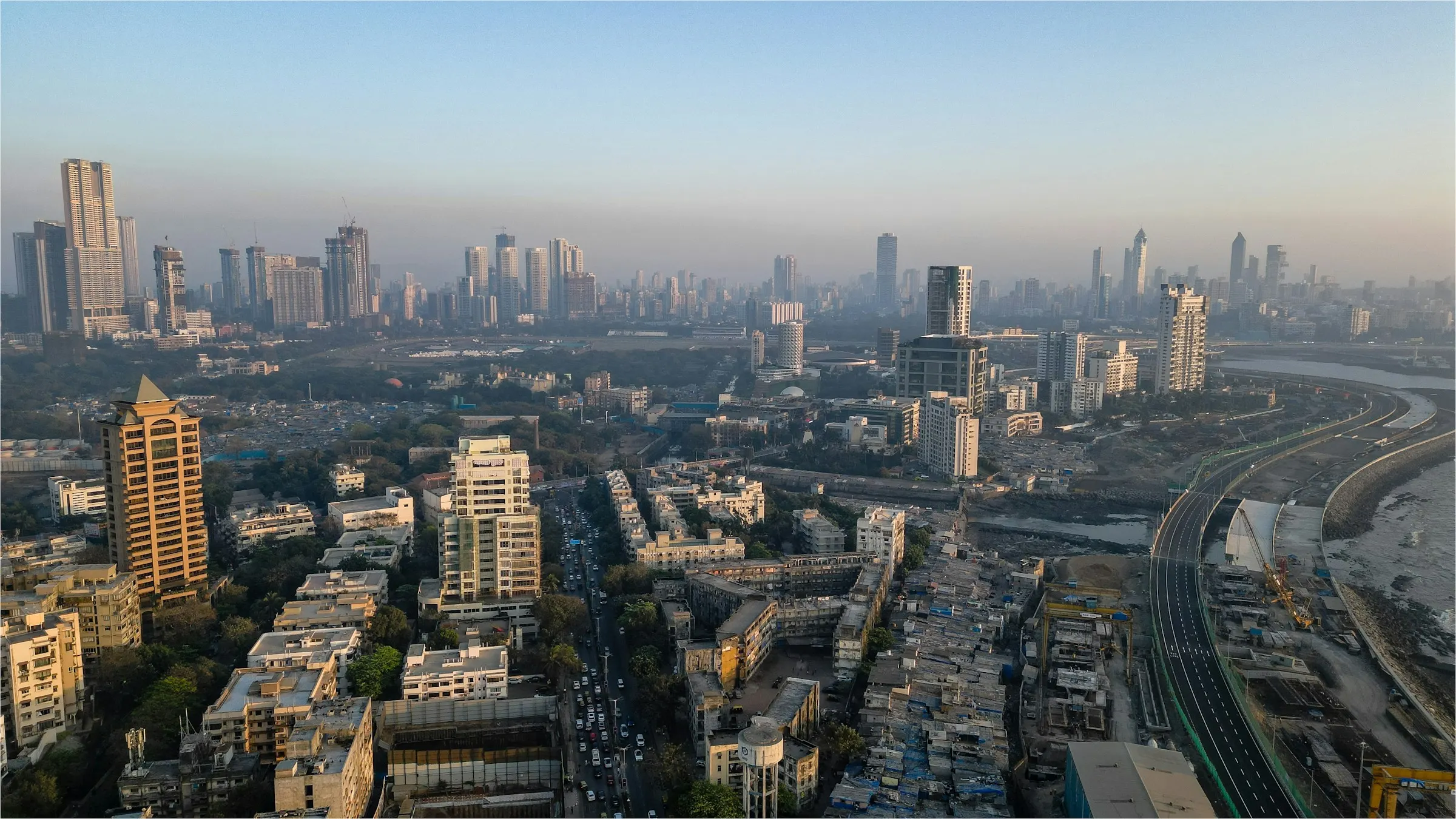
The market
- Flex workspace
Office space offered on flexible terms by an operator, rather than on a conventional long lease from a landlord. It covers coworking, managed offices and serviced offices.
In India the term usually includes both day-pass coworking and multi-year managed offices for large companies.
- Managed office
A floor or building fitted out and run by an operator for one client, under an agreement of usually two to five years with a lock-in. The client gets a private, often branded office without managing the lease, fit-out or facilities.
- Enterprise flex
Flex workspace sold to large companies on contract terms: requirements of 50 to several thousand seats, procurement, purchase orders, lock-ins and escalations.
Global capability centres (GCCs) in Bengaluru, Hyderabad and Pune are among the largest buyers.
- Centre
One building or floor plate run by an operator, with its own seat inventory, prices and occupancy.
An operator might run 14 centres in Pune, each priced and reported on separately.
- Seat
The unit of sale in flex: one workstation, priced per month. Enterprise deals are usually quoted as a number of seats at a price per seat.
- Cabin
A private enclosed office inside a centre, sold as a block of seats.
A 10-seater cabin is priced as 10 seats, often at a premium to open desks.
- Occupancy
The share of a centre's seats that are under contract, as a percentage. It says nothing about price, so it is read together with realised price per seat.
Pricing and approvals
- Rack rate
The published or list price per seat for a centre, before any discount.
- Target price
The price per seat the business plans to achieve in a centre. Discounts are usually measured against it, not against the rack rate.
- Floor price
The lowest price per seat a centre can be sold at without the most senior approval. Often visible only to managers.
- Exception
Any deal term that departs from the standard, such as a rent-free month, free parking, a lower deposit or a smaller escalation. Each one has a cost and should have an approver.
- Realised price per seat
What a centre actually earns per occupied seat per month after discounts and concessions. Comparing it with the target price shows price erosion.
A centre with a target of ₹12,400 that realises ₹11,530 is 7% below target.
Agreements and renewals
- LOI (letter of intent)
A short document in which the client confirms its intention to take the space on stated terms, before the full agreement is signed. Some LOIs carry a token deposit.
- Lock-in period
The part of the agreement during which the client cannot exit without paying the fees for the remaining lock-in. Enterprise agreements in India commonly have lock-ins of 24 to 48 months.
- Notice period
How much written notice the client must give before leaving after the lock-in ends, often three months. A shorter notice usually means a charge for the shortfall.
- Escalation
A contractual increase in the price per seat at set intervals, for example 8% every 12 months or 15% every three years.
₹10,900 a seat with 8% a year becomes ₹11,772 in year 2 and ₹12,714 in year 3.
- Security deposit
A refundable amount the client pays at signing, usually a number of months of fees, held against unpaid dues and charges at exit. Under GST it is not payment for the service until it is applied as such.
- Renewal exposure
The monthly or annual revenue from agreements that expire within a given window, such as the next 90 or 180 days. It shows how much revenue depends on renewals coming up.
Billing and tax
- Purchase order (PO)
A document from the client's procurement team that authorises spending with you, with a value and validity dates. Many enterprise clients pay only invoices that quote a valid PO.
- PO utilisation
How much of a PO's value has already been invoiced, and how much is left. When the balance runs out or the PO expires, new invoices are rejected.
A ₹3.57 crore PO with ₹2.66 crore invoiced has ₹90.6 lakh left.
- GSTIN
The 15-character Goods and Services Tax Identification Number. The first two digits are the state code, so a business registered in several states has a GSTIN for each.
A GSTIN starting 27 is a Maharashtra registration; 29 is Karnataka.
- SAC 997212
The services accounting code for rental or leasing services involving own or leased non-residential property, usually used for coworking and managed office fees, taxed at 18% GST.
- Place of supply
The state whose GST applies to a supply. For a workspace licence it is the state where the centre is (IGST Act, section 12(3)), which decides whether you charge CGST and SGST or IGST.
- Tax invoice
The GST invoice a registered supplier must issue, with the particulars listed in CGST Rule 46, such as GSTINs, a unique serial number, the SAC, the tax and the place of supply.
- Credit note
A GST document that reduces the value or tax of an invoice already issued, for example when a client gives back seats. It must reference the original invoice (CGST Rule 53).
- TDS (tax deducted at source)
Income tax the client keeps back from your payment and pays to the government against your PAN. For flex fees treated as rent, company clients usually deduct 10% of the fee, excluding GST.
- UTR
The unique transaction reference a bank gives every NEFT or RTGS transfer. Recording it with the receipt lets you trace and match each payment.
Collections and reporting
- DSO (days sales outstanding)
The average number of days it takes to collect payment after invoicing. Commonly worked out as receivables divided by revenue for the period, times the days in the period.
- Ageing
Receivables grouped by how long they are past due, usually not yet due, 1 to 30, 31 to 60, 61 to 90 and over 90 days.
- Revenue at risk
Contracted or expected revenue that could be lost or delayed, such as overdue invoices, renewals with no proposal, deals priced below target and POs that block billing.
- Weighted pipeline
The value of open deals, each multiplied by the probability of its stage. A ₹1 crore deal at a 40% stage counts as ₹40 lakh.
Tax terms are summaries, not tax advice. Our GST and TDS guides go into detail and are being reviewed by Chartered Accountants. Last updated 7 October 2026.
See how rivonOS would work across your centres.
One hour with the people who built it, using your own centres. If rivonOS isn't the right fit, we'll tell you.